

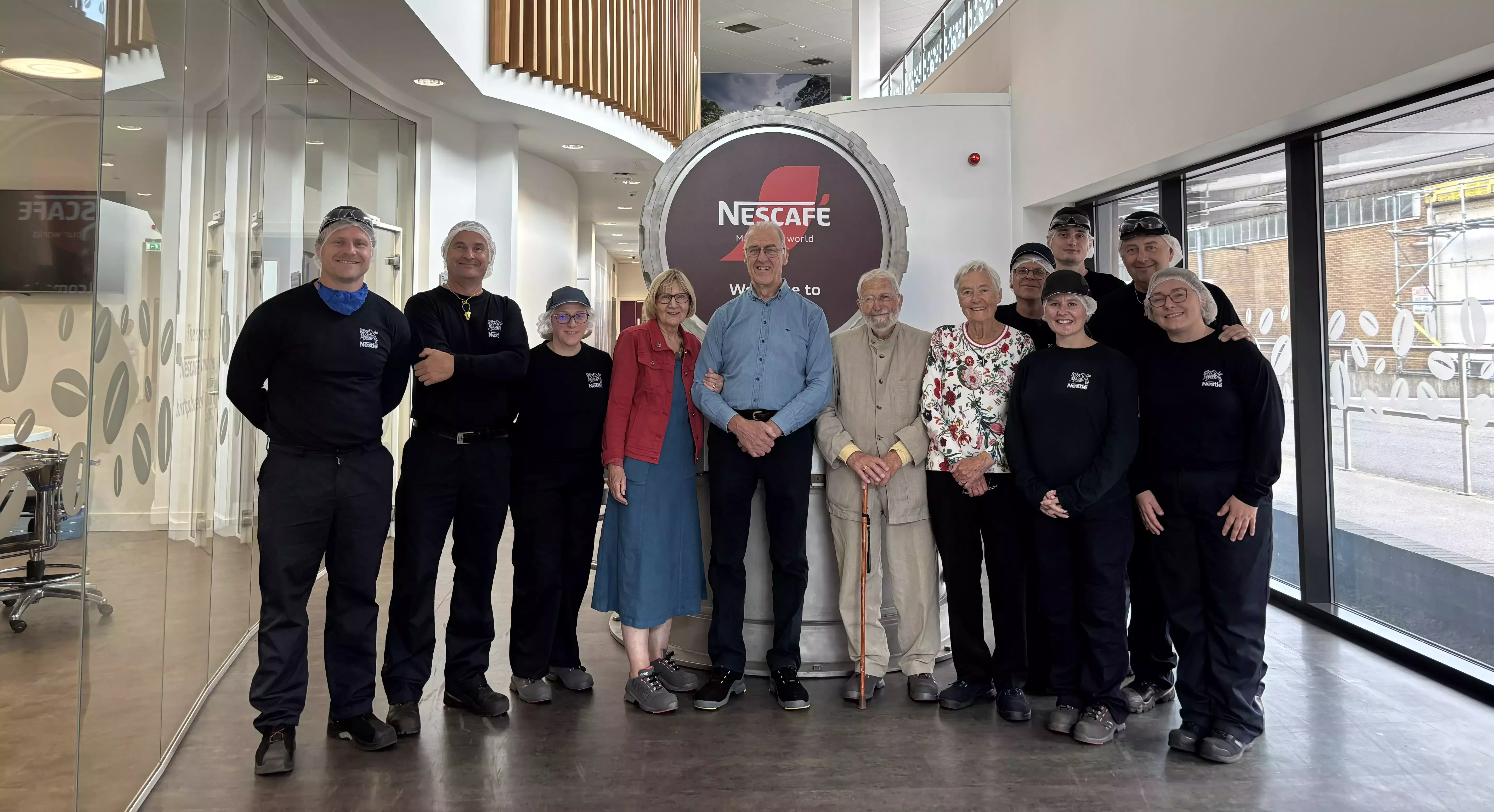
Nestlé Tutbury recently opened its doors to host the third generation of its factory’s founding family, the Dommen’s. Edward Dommen, pictured centre right, and Hugh Ivins, pictured centre left, are both the grandchildren of Edouard Dommen, who founded the factory in 1901.
Nestlé Tutbury was originally a tinned milk factory, before moving to instant coffee production in 1959. Now, the factory turns over 40 tonnes of green bean coffee a day to go into its Nescafé and Nescafé Dolce Gusto brands.
Nestlé also welcomed their wives, Susi Ivins and Bridget Dommen, to its Tutbury site. The family were given a tour of the factory that included bean tasting, a view into Nestlé’s advances into automation, as well as spray dried bean packing and freeze dry manufacturing areas.
The family were shown the sights by Hannah Davey and Fran Taylor, two former apprentices who have been at Nestlé for more than 10 years. Andy Wildridge, Simon Hinks and Cliff Stubbs delved into their worlds of expertise across bean tasting, fill and packing and coffee pod manufacturing.
David Guest, Nestlé Tutbury Factory Manager, said: “It was a pleasure to host the Dommen and Ivins family today, to showcase the rich history of Nescafé right here in Tutbury. We are committed to excellence in manufacturing, and it was a pleasure to tell the story of how our production process has evolved over the years.”
Nestlé’s Tutbury factory was one of the first factories to be built by Nestlé in the UK in 1901. Milk would arrive from neighbouring farms in metal churns on the back of a steam-powered wagon and leave in tin cans via the dedicated railway siding. Since then, there has been more than £400 million invested in the factory. This has transformed the once small dairy into a Coffee Centre of Excellence, housing all forms of coffee production including freeze dried, spray dried and pod technology together on one site and employing more than 700 people.
