

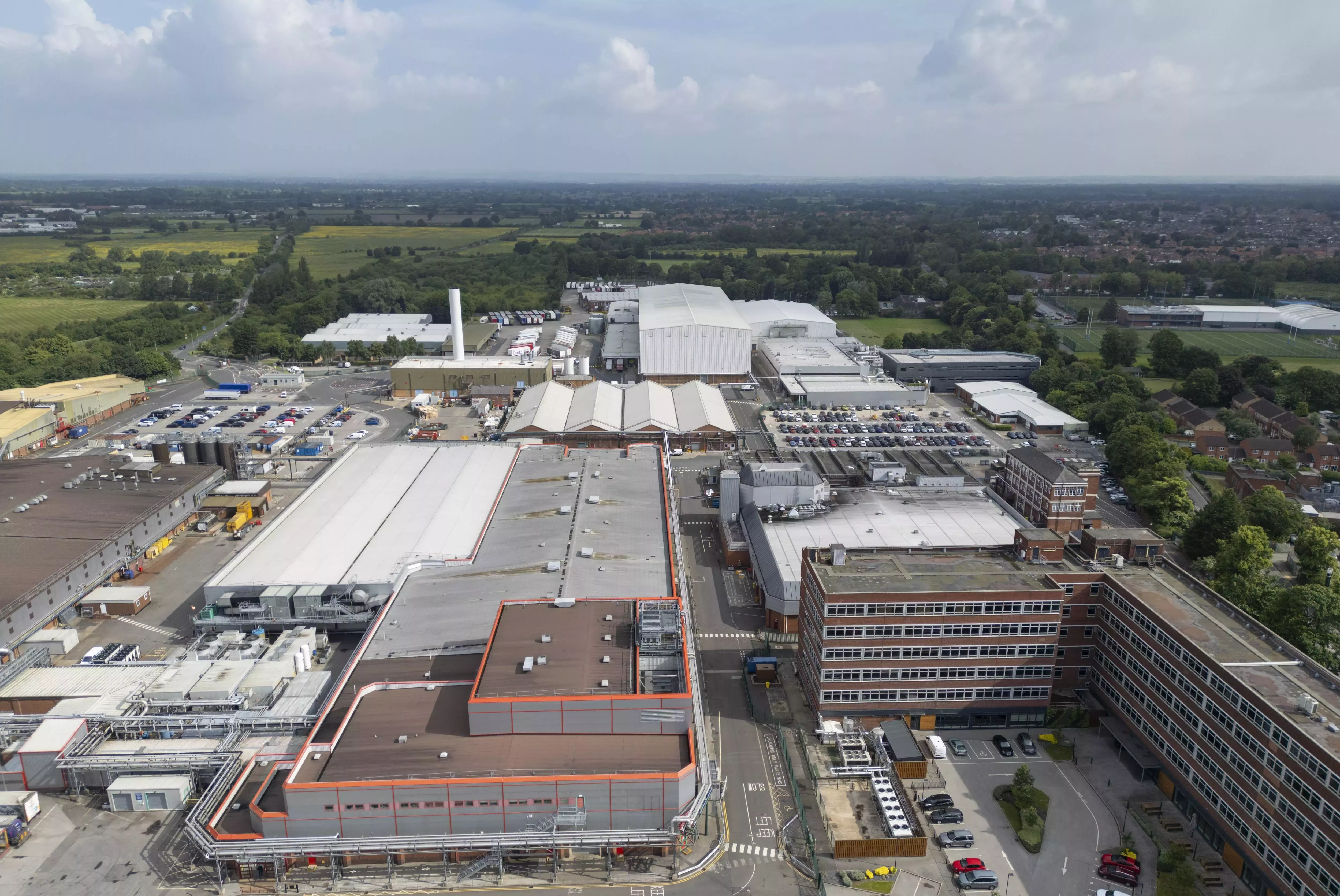
Businesses and food charities came together to pilot a first of a kind AI solution to visualise food waste, reduce it and redistribute unavoidable surplus to people - the equivalent of 499,863 meals. This food supported an estimated 94,133 people across hundreds of charities and organisations, with more food going to people rather than animals or waste. The project showcases how these solutions in partnership can be scaled at speed to build a more efficient food sector.
In 2021, UK food manufacturers generated 1.4 million tonnes of food waste - seven times more than that produced by food retailers. While manufacturers seek greater visibility to pinpoint these losses, redistribution organisations increasingly view the sector as a vital source of high-quality food surplus.
Over the last 16 months, a nine partner consortium piloted Zest’s AI-led solutions that addressed this challenge. The collaboration convened by Sustainable Ventures involved piloting Zest’s solutions within Company Shop Group, FareShare and Nestlé’s real-time business environments to work through the technical and operational complexities for scaling. The scope, feasibility and benefits of these innovative solutions were tested with Bristol Superlight, FuturePlus, Google Cloud and Howard Tenens to de-risk its full scale implementation. The AI-led food waste project” was funded through a £1.9 million match-funded BridgeAI grant from Innovate UK.
There are many reasons for food waste and surplus generation in food manufacturing and the absence of detailed data on the quantity and timings for its generation make it extremely hard to address it. The pilot demonstrated the enabling power of AI in connecting siloed data points on a Nestlé manufacturing line to map where exactly food waste and surplus is generated in real-time, and identifying actions to reduce and redistribute it. Early comparisons indicate strong potential for AI to improve speed, accuracy, consistency and predictability of data analysis versus manual waste assessment. During the project, Zest trialled their solutions with a number of other food manufacturers. In one trial, the AI-led process halved the speed of the manual process, and quadrupled the amount of food waste identified.
Zest’s optimised solution addresses two critical pillars of surplus management: production-line visibility and intelligent redistribution. By applying AI-optimised algorithms, the platform seamlessly matched unavoidable edible surplus from four Nestlé sites with the real-time demand and capacity of Company Shop Group and FareShare. Logistics partner Howard Tenens tracked and fulfilled these surplus deliveries, providing the essential physical infrastructure to move food safely from Nestlé sites to FareShare's network.
The top three impacts from the AI-led food waste project were:
- 4.8 tonnes of edible food surplus was newly identified on a production line and sold for human consumption over animal feed, which saw a 15 times increase in revenue from surplus.
- 201.9 tonnes of food surplus was redistributed to people, which is equivalent to 480,529 meals. If these goods had not reached surplus status, their retail value would have been over £1 million.
- The food surplus provided supported an estimated 94,133 people across 787 charities and community groups.
Sustainable Ventures has produced a White Paper - “On the table: Scaling AI-led food waste and surplus visibility, reduction and redistribution” which recommends how these solutions could be scaled:
Food manufacturers could look to adopt solutions that use AI data, such as Zest, that boost speed, real life data insights, and gather more data to deliver lasting operational changes such as reductions in food waste.
Reach a consensus on a single surplus food redistribution platform that can streamline and match food manufacturers and redistribution organisations food. There needs to be a critical mass of food surplus supply and demand organisations using it to unlock its full efficiency benefit. Collaboration between corporate and Climate-Tech innovators has a critical role to play in accelerating commercial solutions to business challenges and should be adopted more broadly. Organisations such as Sustainable Ventures can provide the connections and expertise to drive these types of growth initiatives.
Andrew Wordsworth, Founder & CEO Sustainable Ventures, said: “The collaboration between startups, corporates and charities in this project consortium demonstrated how Sustainable Ventures can de-risk piloting climate tech innovation in live business environments. Collaborative technology development can only lead to better outcomes, especially in relation to artificial intelligence, where pilots like this help to bring its use case to life. Collaborative technology development is also an opportunity to understand how innovative solutions can be tailored to suit sector or organisational needs.“
Claire Antoniou, Head of End to End Transformation Nestlé UK & Ireland, said: “It’s been fantastic to be part of this pilot project which has helped us turn data into action, reduce food waste while strengthening our ability to redistribute surplus food to where it’s needed most. This exciting cross-industry initiative could go on to benefit a whole industry.”
Dini McGrath, Founder and CEO of Zest, said: "At Zest, we are realists; while some surplus in manufacturing is inevitable, leaving it unmanaged is a choice the industry can no longer afford to make. We were fortunate to find a partner in Nestlé who shares our vision for a more resilient food system, and with the support of the FDF and its members, we have de-risked a new-to-market solution that is already delivering results. By acting as an ‘AI factory intelligence layer,’ Zest unifies siloed data to help manufacturers make better decisions in real-time. This £1.9 million BridgeAI project proves that eradicating waste is no longer just 'the right thing to do', it is a fundamental business imperative for any manufacturer looking to remain competitive in an increasingly margin-constrained market."
Charlotte Hill, CEO of FareShare and The Felix Project, said: “We are enormously grateful to all the partners involved in this ground-breaking project. At a time when demand for food support is at an all-time high, it is essential to come together and explore the real-life benefits of the next generation of technology. AI is becoming increasingly important in driving business improvements across multiple industries, and we're delighted to be part of an innovative project exploring its capabilities for rescuing and redistributing surplus food. Innovative tools such as those used to quickly map surplus have the potential to transform the food redistribution sector.
“Over 8,000 charities and community groups across the UK already rely on food redistributed by FareShare, enabling them to provide essential services to the people they support. By unlocking new efficiencies in systems, we can get more food to more local organisations, supporting more communities and people in need, creating greater social impact. As we move into a new phase, merging FareShare and The Felix Project to become a more ambitious charity with greater national impact, we look forward to continuing to work closely with partners to explore opportunities for further innovation.”
Case study
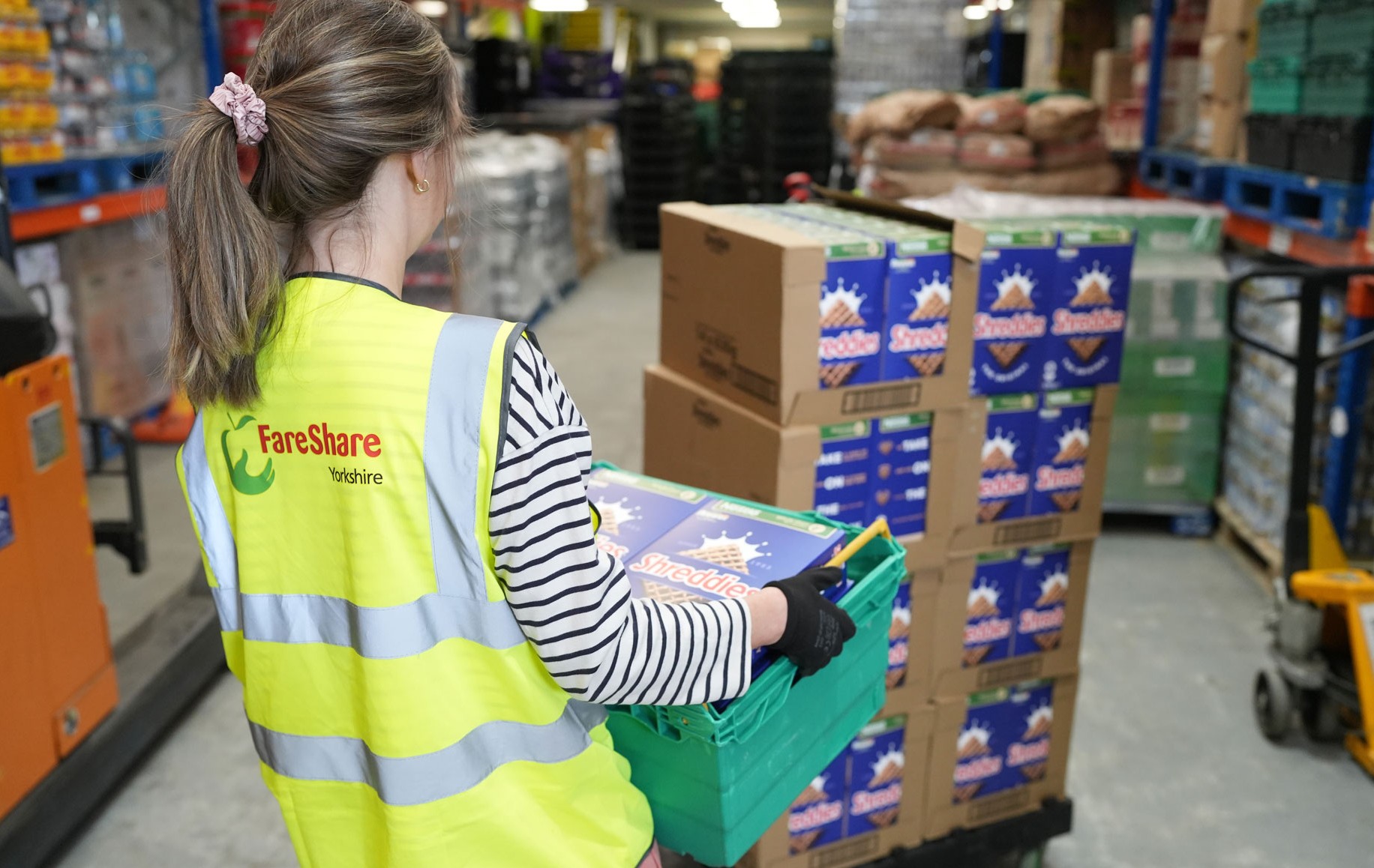
St Paul’s Community Pantry in Sheffield is one of over 270 charities receiving weekly deliveries via FareShare Yorkshire’s redistribution centre. They were amongst a number of projects that received products from the project including breakfast cereals, chocolate and drinks as a result of the project. Tina Sampson-Smith, St Paul’s Community Pantry, said: “We'd be lost if we didn’t have FareShare; the food really diversifies the offerings in our area and helps families maintain a balanced diet. During the winter, we give out food packs to the elderly with things like coffee, hot chocolate, soup and also warming breakfast cereals. Recently, we made sure to give them some really nice porridge that came through from FareShare that had a bit of golden syrup in it. Often you’d go to an elderly person's house and discover that they're too frightened to put the heating on and they don't have enough food, because of the cost of living crisis.”
