
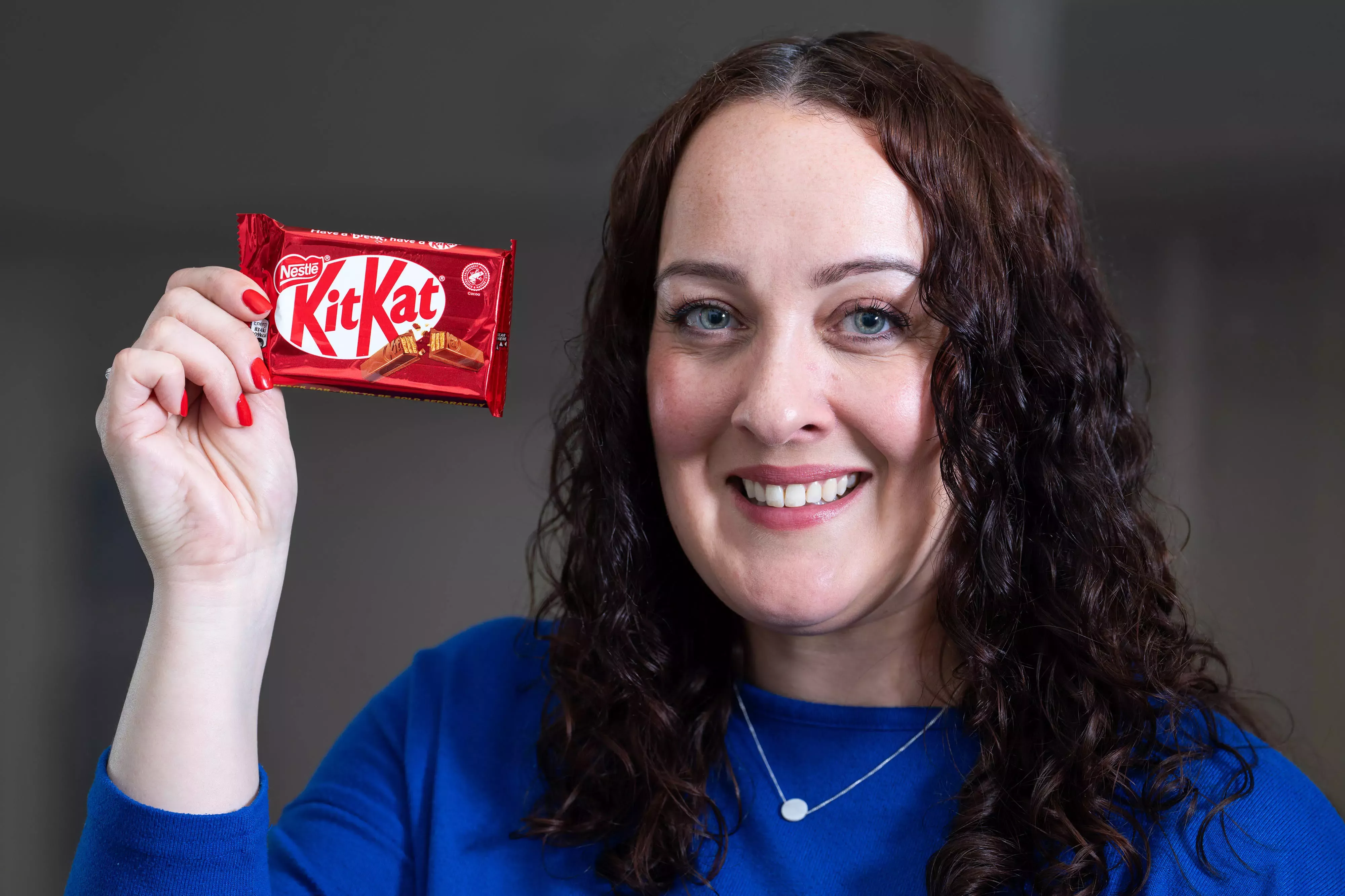
Meet Sarah Drakes, Sustainability Manager in confectionery at Nestlé UK and Ireland. Sarah works across our confectionery brands, with many made in the UK, from KitKat and Aero to Quality Street, Yorkie, Polo, After Eight and more.
From sourcing and packaging to the bigger picture on emissions, Sarah helps drive work that moves our brands forward and supports our wider sustainability ambitions.
Together with Wildfarmed, we’ve launched a KitKat made with a regenerative wheat blend - an important step forward in our journey to source ingredients more sustainably. Behind that launch is a team of people helping to make it happen. So, let’s hear more from Sarah.
Sarah, what role have you played in helping shape this launch?
"I've worked on the project from the early days with the sustainability and procurement teams, acting as the link into Nestlé’s confectionery category. My role has been to make sure the initiative aligns with our sustainability strategy for confectionery, that it works for KitKat and has a clear commercial proposition.
"This means looking at it from a sustainability supplier, business and reputational point of view, and helping get the business case approved. It's been a big team effort, and I've worked with the full cross-functional team to develop the relationship, build the launch plan and share the news internally and with our customers."
How does this project connect to Nestlé Confectionery’s wider sustainability ambitions?
"This initiative is a key next step in our journey towards sustainable sourcing. We have several commitments and targets around sustainability, from reaching net zero emissions by 2050 to sourcing more of our ingredients regeneratively. We've been talking about regenerative agriculture for a while now, working with our suppliers on initiatives to help ingredients, like the wheat in our KitKat wafers, be farmed using methods that work more closely with nature.
"Sourcing a proportion of our wheat supply from a regenerative farming business like Wildfarmed helps support both goals. The wheat has a lower carbon footprint than conventionally farmed wheat, and the way it's grown meets regenerative agriculture standards. Wildfarmed set constraints on when and how much fertiliser can be applied, as well as banning the use of insecticide, and requiring reduced tillage. Regeneratively farmed crops can be more resilient to climate change, and as we’re increasingly seeing, British summers can either feature a heatwave like we're seeing this year or very wet weather, neither of which are good for growing wheat! Ultimately it helps build longer-term supply chain resilience."
What does working with a partner like Wildfarmed make possible?
"This is the first time in Nestlé Confectionery we've partnered with a business that has sustainability built into its purpose. We're not having to build a programme from scratch like the Income Accelerator Programme or Nestlé Milk Plan. We're buying regeneratively farmed wheat from Wildfarmed and its farmers, who already see the benefits of farming this way.
"I was lucky enough to visit one of their farms last summer, and it was amazing to see first-hand the practices they have in place to increase biodiversity on farm such as wildflower field margins which encourage and support pollinators and natural predators.”
How important is it to have teams across the business working together to make ambitions turn into action?
"It's a huge team effort to bring something like this to life. It's been more than two years in the making. The factory teams have done many rounds of technical work and trials to make sure the Wildfarmed wheat meets our quality standards - which it does! We also heard praise from York factory that it makes 'better batter', which I love. Procurement colleagues have onboarded a new supplier, our sustainability experts have verified the carbon and regenerative agriculture benefits. Corporate communications have developed the plans to announce this step to colleagues as well as the outside world. And, of course, the KitKat brand team have overseen the work, protecting the beloved British brand. A lot goes into it, and I'm so happy to see it become a reality."
Why is it important that sustainability shows up in brands people already know and love, like KitKat?
"It's so important. Consumers expect big companies and brands like ours to do the right thing and support more sustainable practices. That helps build trust, as well as longer-term brand equity and loyalty. KitKat is our biggest brand, and we all know a KitKat wouldn't be a KitKat without the iconic snap of the wafer inside. We already have the long-standing Nestlé Cocoa Plan and Milk Plan, and this is another step towards a more sustainable KitKat.
"Today, all of the cocoa we source for our UK production is Rainforest Alliance certified, with a proportion traceable to farmers enrolled in the Income Accelerator Programme, which supports cocoa farming families in West Africa to improve their livelihoods. All the fresh milk used to make KitKats in the UK comes from Scottish dairy farmers enrolled in the Milk Plan, which promotes regenerative agriculture. And now, we're getting started on the wheat too. Together, these steps are starting to make significant impact."
What’s it like seeing this work turn into a product people can actually buy?
"It's always a proud moment when a project you've worked on for so long finally comes to life, especially one that is making a positive impact on the environment where its grown and helping us move towards achieving our sustainability targets. A massive thank you from me to the full project team for their resilience and hard work."
