Sort by
Sort by

Meet the person behind the snap: Rob Jackson

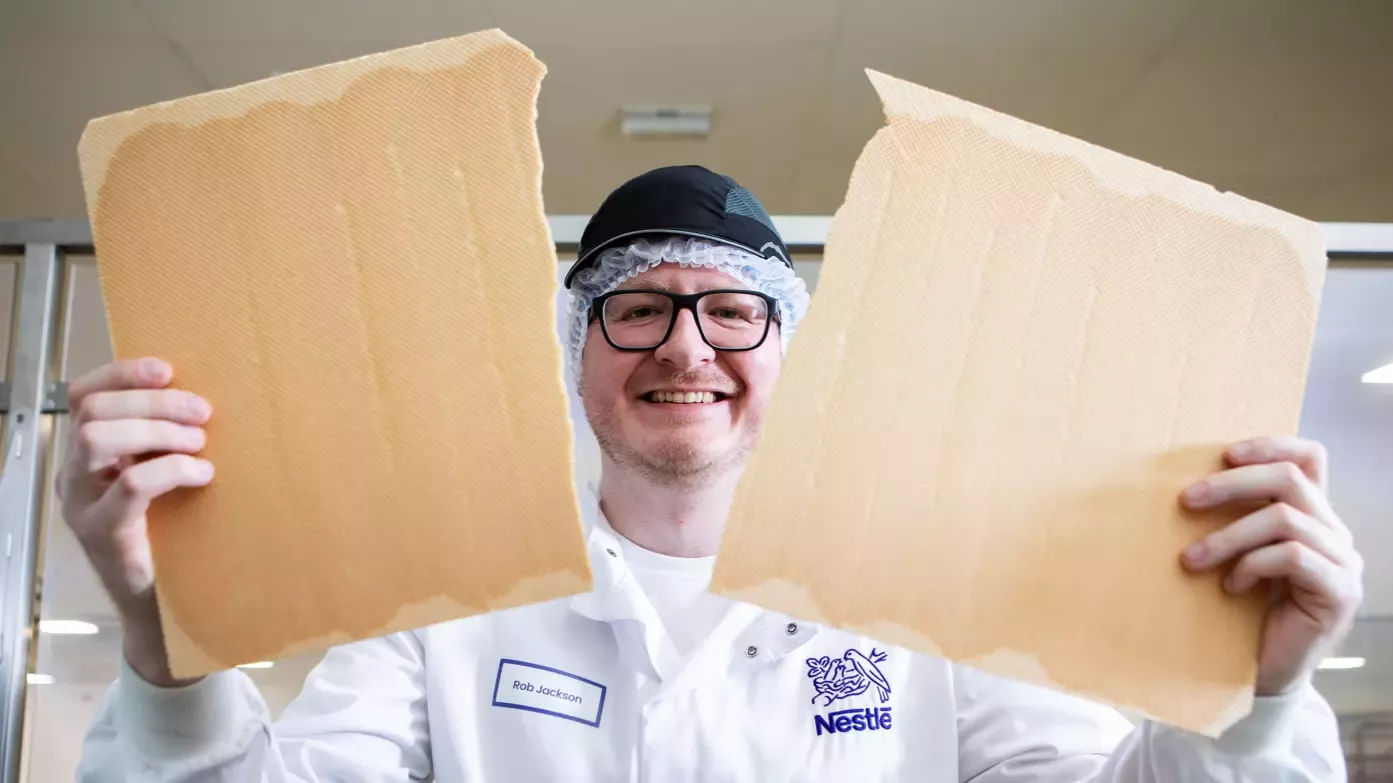
Man wearing glasses holding up two sheets of wafer in each hand.

Meet Rob Jackson, Product and Process Specialist at Nestlé UK and Ireland. He’s usually on the factory floor, where no two days are quite the same. Whether it’s testing a new ingredient, fine-tuning a recipe, trialling new equipment or adapting a manufacturing process. But over the past year, he’s been working very closely with one ingredient: wheat that’s been regeneratively farmed.  

That’s because Rob has played a key role in bringing our new partnership with Wildfarmed to life in the KitKat factory, testing, and making sure the recipe still delivers that signature snap.

Together with Wildfarmed, our KitKats are now made with a regenerative wheat blend, an important step forward in our journey to source ingredients more sustainably. Behind that launch is a team of people helping to make it happen. So, let’s catch up with Rob.

Rob, what was your role in helping bring this product to life?

“I’m the technical lead on the project. That means it was my job to make sure the new wheat flour worked in the factory just as well as our conventional wheat flour, or even better. The process started with working alongside the Wildfarmed team and our laboratory experts at our global Nestlé Product Technology Centre on our York campus, to make sure the flour met our requirements. That included testing small samples and making changes at the wheat blending and flour milling stages with Wildfarmed, before we even brought any flour into the factory.

“Once we were confident, the next stage was working with our operations team on the factory floor to bake flour under trial conditions in our wafer ovens, solving any challenges and making small tweaks to our process, so we could deliver the same classic KitKat that people know and love.”

What were some of the biggest challenges in working with a new type of wheat?  

“Wheat is a natural ingredient, so it can vary a lot depending on the varieties grown, where and when they are grown, and how much rain or sunshine they get along the way. That means when you change to wheat sourced from farms using regenerative farming practices, there will naturally be some differences in the flour. The flour needed to make wafers is not like bread flour you can buy in the supermarket; it is quite a specialist ingredient - and it makes up the majority of the wafer, so it is really important to get it right. Wafer is the first part of the KitKat process, so if you can't make wafer then you can't make any KitKats, and then we have a whole factory line making nothing!

“The wafer baking process works best when everything is consistent. So, the challenge is about being adaptable, making sure we can still produce the same classic KitKat wafer, with a shift in ingredients. For this project, it was about coming together with our expertise and Wildfarmed’s expertise to produce the perfect flour for wafer.”
How do you make sure KitKat keeps its signature snap when ingredients change?  

“Keeping that signature snap comes down to knowing your product and processes inside out – and that definitely isn’t down to just me! The Wildfarmed team really know their wheat and their farming. We worked with them to select the right types of wheat to produce a good flour. The wheat then goes to the flour mill, where the experts there know everything they possibly could about their flour and milling process. We worked closely with them to turn the wheat into the right type of flour for a good wafer. Finally, I worked with our technical operators in the factory, those who know our wafer ovens and baking processes, to turn that flour into wafer which delivers that signature snap. It really is a team effort from start to finish.”

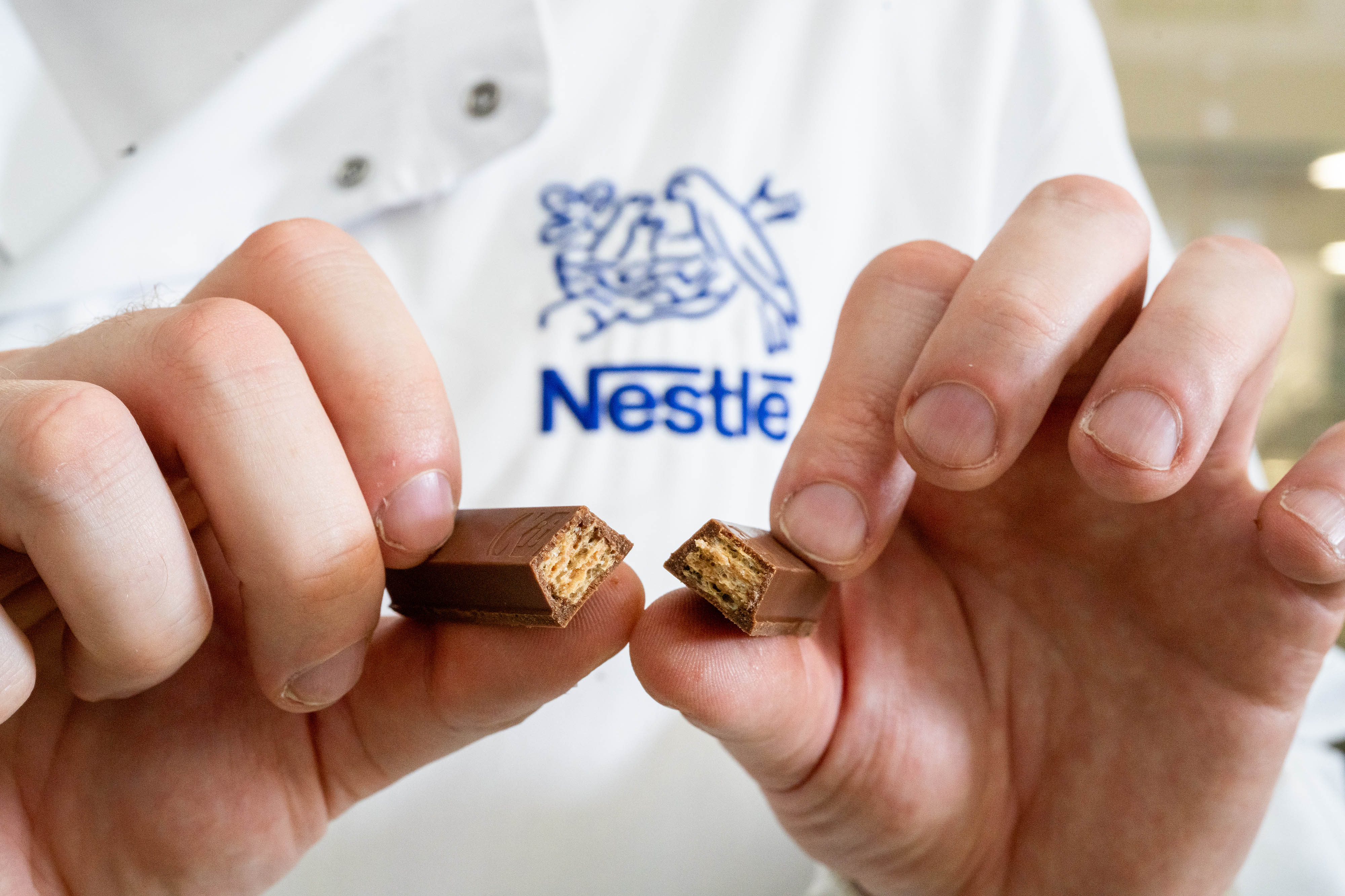
Hands holding a snapped-in-half KitKat bar to show the wafer.

What have you learned through the process of bringing this product to life? 

“For me personally, this has been my first experience directly working on a project linked to regenerative agriculture. Of course, sourcing ingredients more sustainably is already a big part of how we work at Nestlé, whether that’s sourcing cocoa through our Income Accelerator Programme or milk through the Nestlé Milk Plan, where regenerative practices take place. But this was the first time I’d been so close to that process through wheat and seen how decisions made right at the start of the supply chain can shape what happens in the factory.

"I’ve always been interested in sustainability, both at work and at home, but like most people I’ve experienced that at the end of a product’s life cycle through reusing and recycling things. So, to see in practice how changes in farming, right at the very start of making something, can have an impact on the environment has been really interesting. And this project is just one of many happening across Nestlé as we work towards our commitment to have 50% of key ingredients sourced from regenerative agriculture methods by 2030.”

What did this project show you about what it takes to bring more sustainable ingredients into a product as iconic as KitKat?

“It takes commitment. When you’re working with a brand as big and well-loved as KitKat, change can feel daunting. It’s been really important to have support from people at every level of the business, and to be able to invest the time and resources needed for the trialling process. But it’s absolutely worth it. When you’re working with a brand as big as KitKat in the factory, that makes more than one billion bars a year (and that’s just our two-finger bars made in our York factory!), a change like this can scale up to real impact.”

What does it mean to you to see this work become a product people can buy?  

“I’ve worked at Nestlé for almost 10 years, and in that time, I’ve launched new products and even helped launch new brands. But I think this project will always stick with me as something really meaningful.

“It’s funny, because when you eat it, it’s got the same great taste and texture as before, but behind-the-scenes, it’s helping improve soil health in farmers’ fields and support biodiversity in the British countryside. I think that’s something I can be proud of – even if you won’t notice a difference.” 

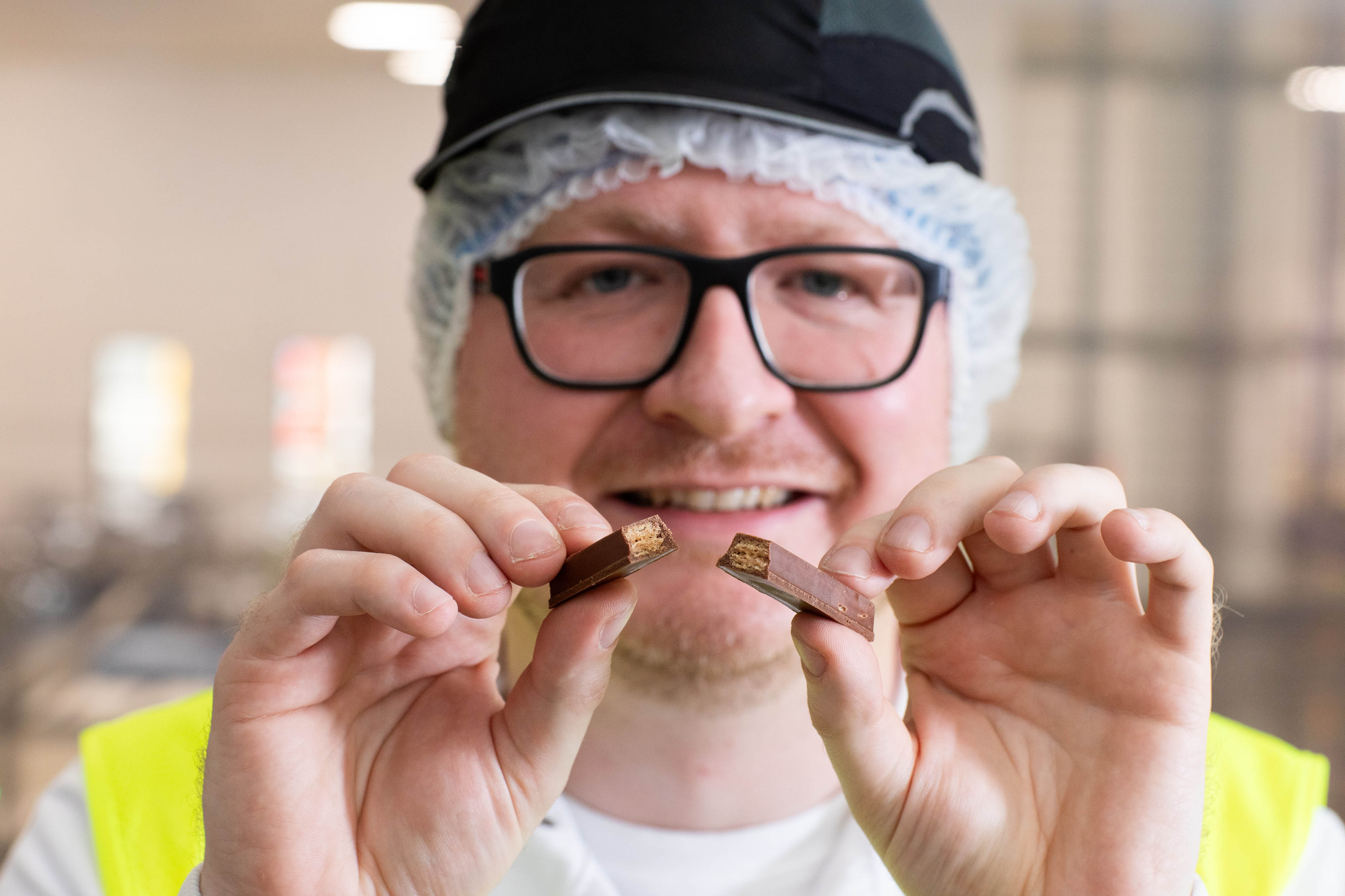
Man wearing glasses holding up a KitKat bar broken in half.