Gender Pay at Nestlé
Read our Gender Pay Report 2026 for Nestlé UK and Ireland
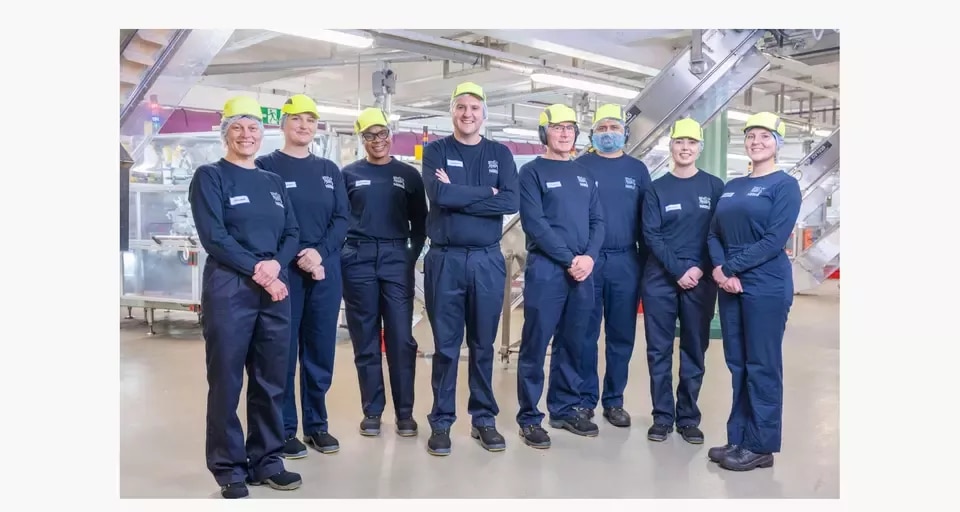
“With thousands of colleagues working across factories, warehouses, offices and boutiques in the UK and Ireland, a strong commitment to gender equity is essential for our business. This report helps us understand where opportunities exist and where barriers remain, so while we have made progress in some areas, we know there is more to do to achieve better balance to create a stronger business. My leadership team and I are committed to driving that progress, to taking action, measuring our impact and creating a workplace where everyone can contribute their best.”

What is gender pay reporting?
In both the UK and Ireland, there is a legal requirement for organisations to publish data on gender pay. Gender pay reporting is a comparison of the average earnings of men compared to the average earnings of women regardless of the work they do.
The principles are the same in the UK and Ireland, although the calculations for Ireland are slightly different to those required in the UK.
Is it the same as equal pay?
Equal pay is different. It considers whether men and women are paid equally for equal work.
What does gender pay reporting tell us?
Gender pay reporting can give an insight into whether men and women are equally represented in an organisation and whether there are more men than women in more senior roles. Data can though be complex and we feel it’s important to understand and share what sits behind our data as we’ve tried to do in this report.
In an organisation where there are more men in higher paid roles, you might see a gender pay gap in favour of men.
Why does it matter?
We believe in equal opportunities for all genders, which is why gender representation across our business is an important area of focus. We don’t currently have gender balance and improving this balance is an important part of our ongoing commitment to foster a culture where everyone thrives.
Our organisation
We have a variety of sites across the UK, including factories and warehouses, offices, Nespresso boutiques and a product technology centre. In Ireland, we have a head office and Nespresso boutiques.
Representation of women in different parts of our business varies and this impacts our data. In the UK, overall we employ more men than women. In Ireland, overall, we have more women than men. In both countries we see the same patterns.
In our offices and in our Nespresso Boutiques we have more women than men. Across our factory and warehouse sites we have more than 80% men. Across UK and Ireland, we have good representation in our senior roles, although in our top leadership we have just over 40% women. In this report you’ll see the work we’re doing to achieve balance in all areas.
2026 data
When we refer to Nestlé in the UK, this includes a range of legal entities in the UK. Nestlé UK Ltd (includes our Coffee, Confectionery, Food, Nutrition & Health and Professional businesses, as well as factories and corporate functions such as Group HR). You can also see the other entities included in Nestlé in the UK as we include data on each entity in addition to the summary. In Ireland we are only publishing data on Nestlé (Ireland) Ltd.
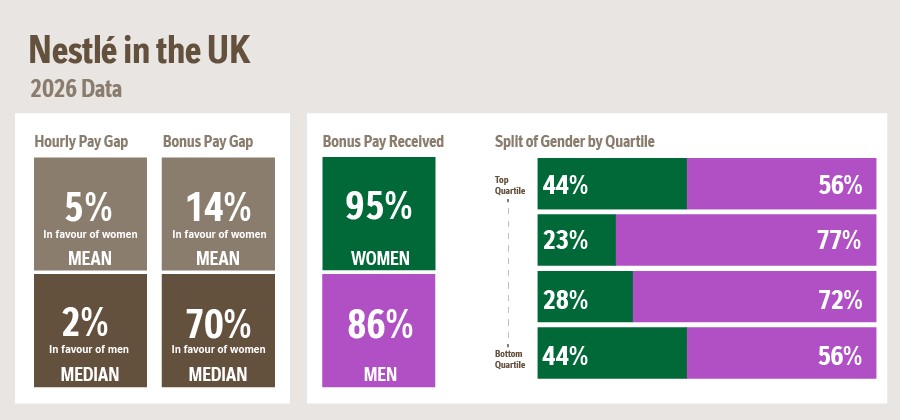
All these businesses share a common approach to pay and bonuses although there are some different schemes in place reflecting where individuals work. The 2026 report covers 6,397 people in the UK and 75 people in Ireland.
What we have to report
We have to report on mean and median data. Mean data is calculated by adding up all the numbers in a sample and dividing by the number in that sample.
Median data is calculated by arranging the numbers in order from the lowest paid to the highest paid, and the middle number is the median.
In our report, the calculations of mean and median gender pay gap and bonus pay gap are calculated by taking the figure for women away from the figure for men and dividing by the figure for men.
To calculate pay quartiles or quarters we put the pay of all individuals in descending order and then split them into four equally sized groups. We then report on the percentage of men and women in each group.
“Two-thirds of our workforce in the UK and Ireland work in operations, so improving gender balance here is essential to make progress across Nestlé. Behind the products we make are people bringing skill, care and expertise to their work every day. We need to challenge perceptions about who manufacturing and technical roles are for and look at people’s experience once they join us. I want everyone to feel respected, have their contribution recognised and receive fair opportunities to build their skills.”

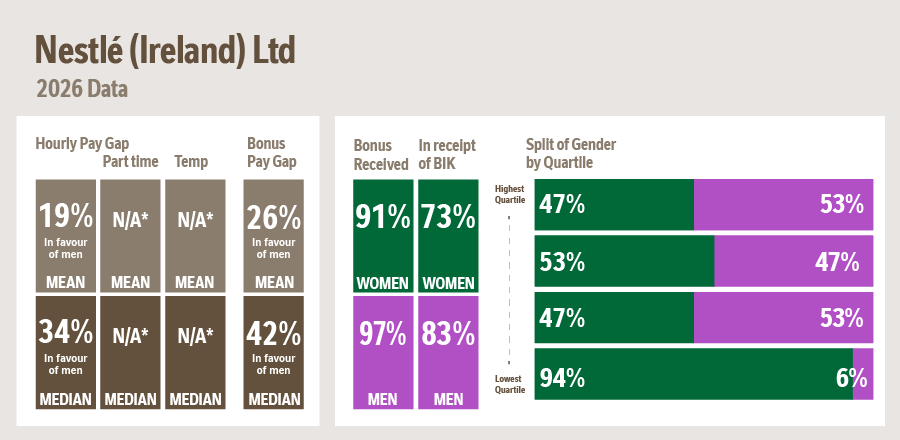
* We are not able to provide figures for this gender pay comparison.
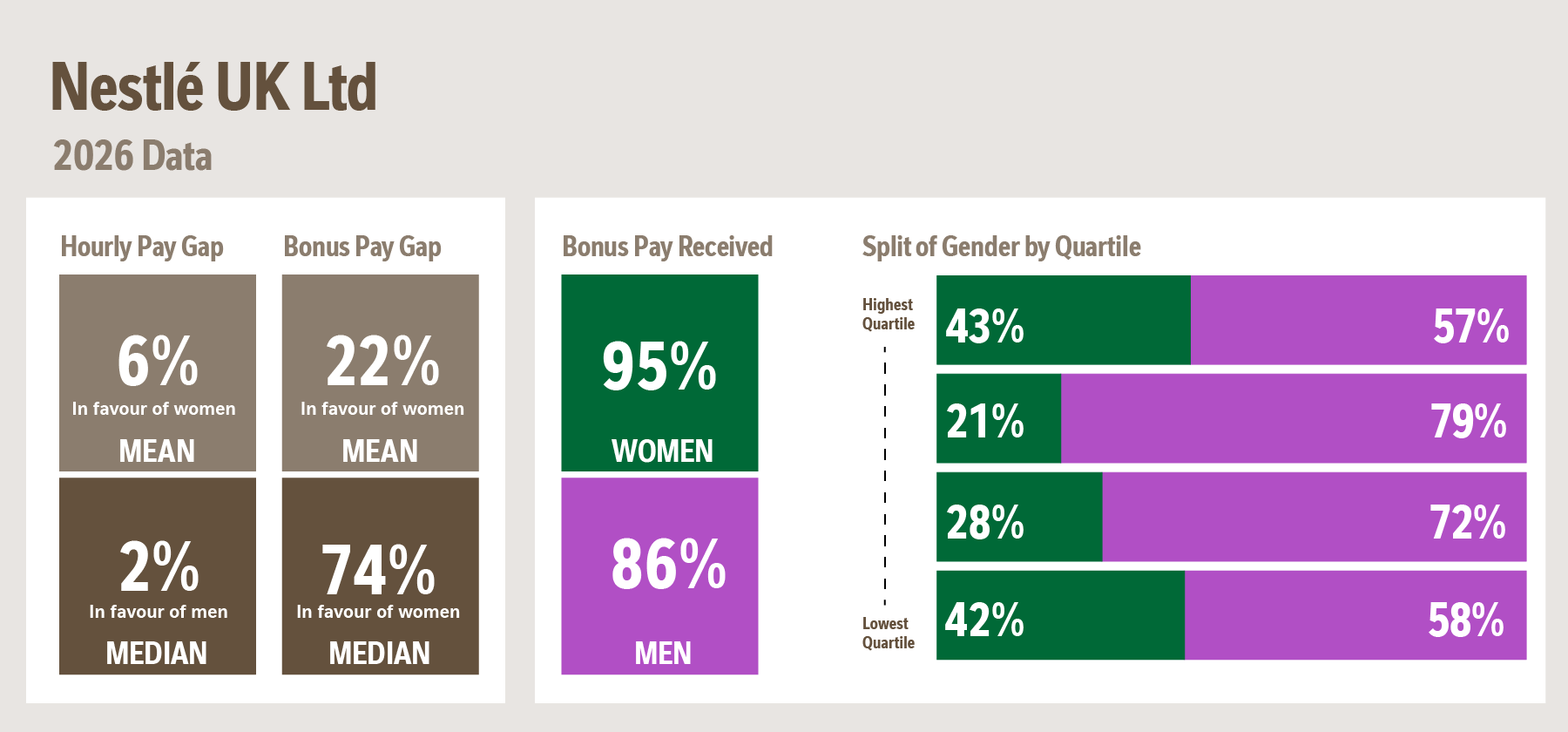
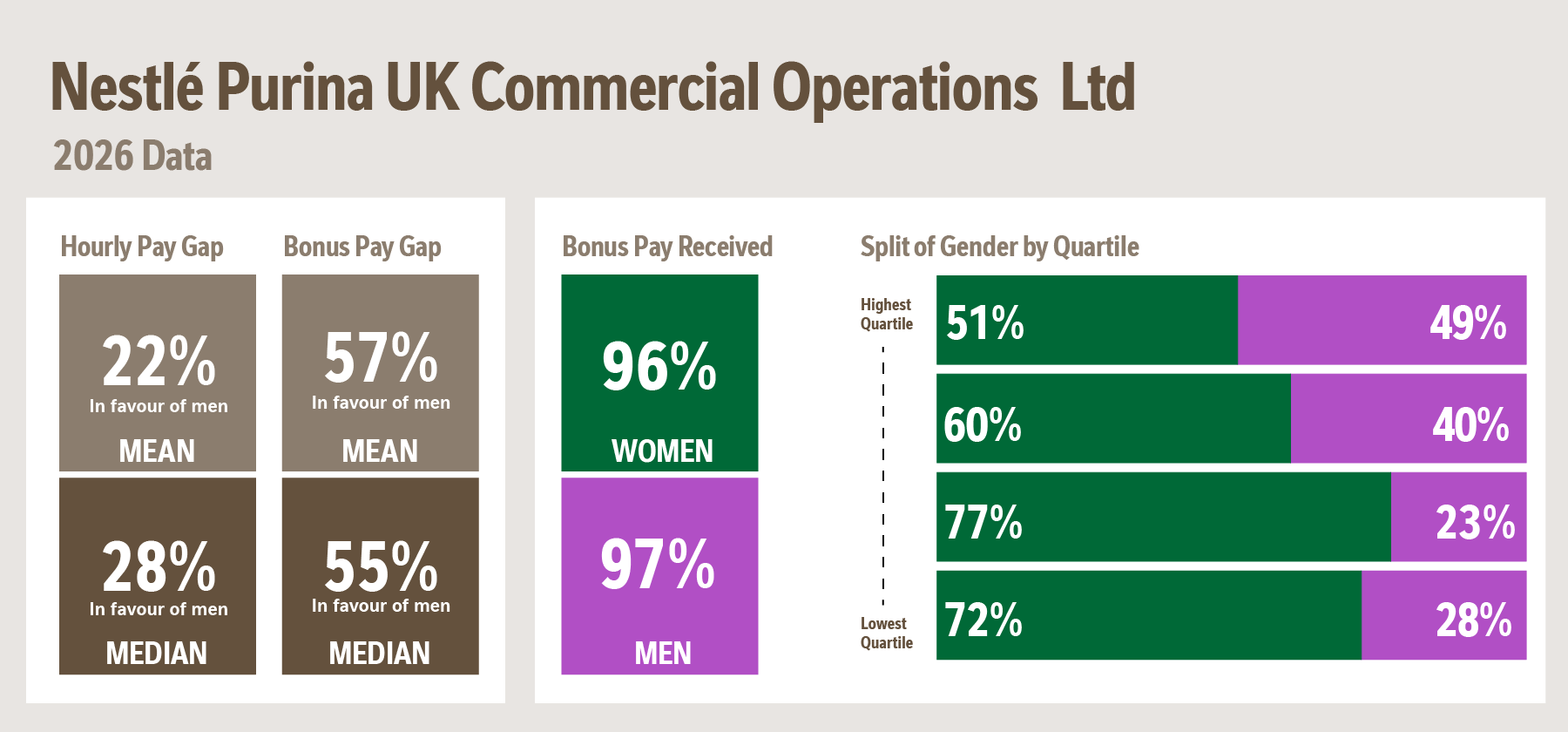
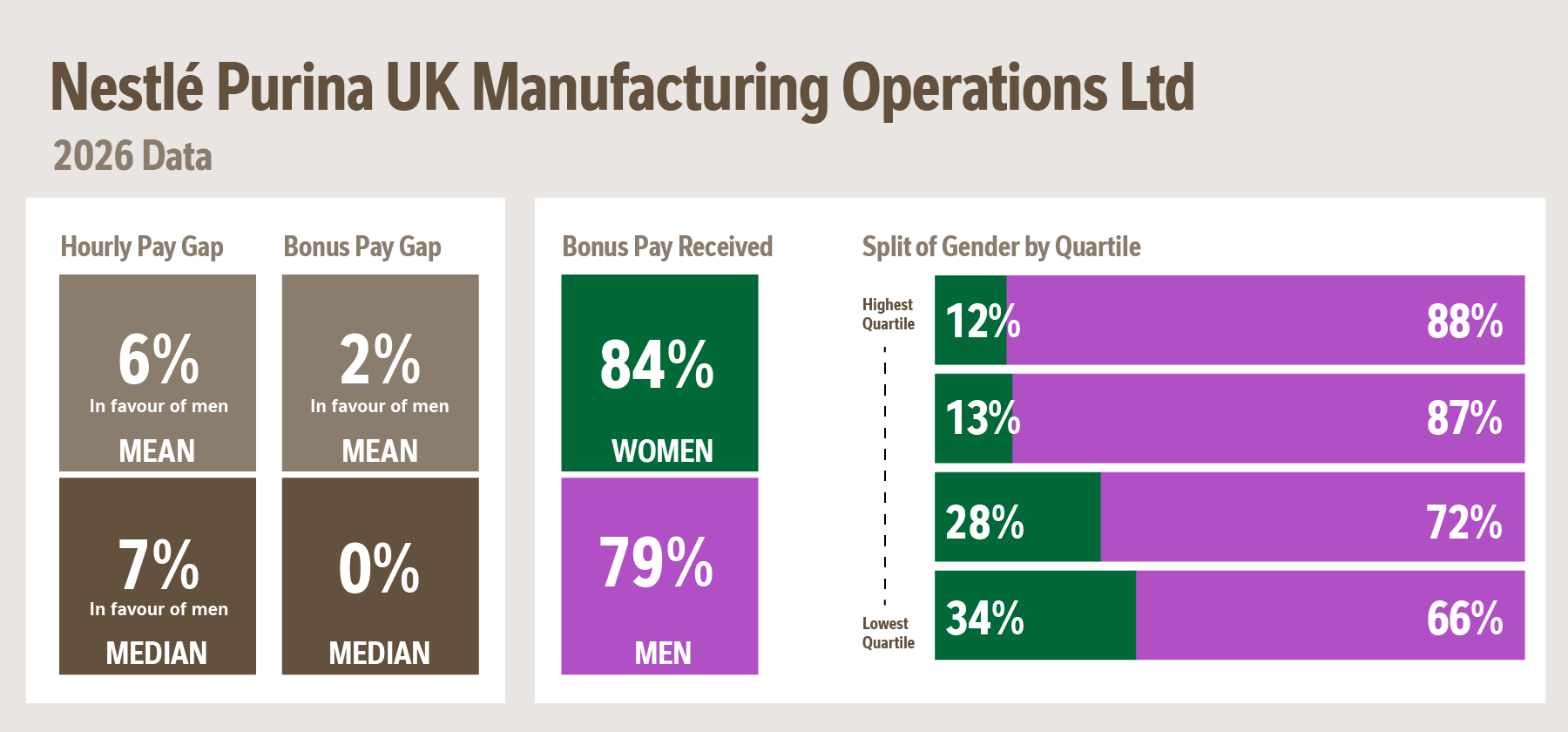
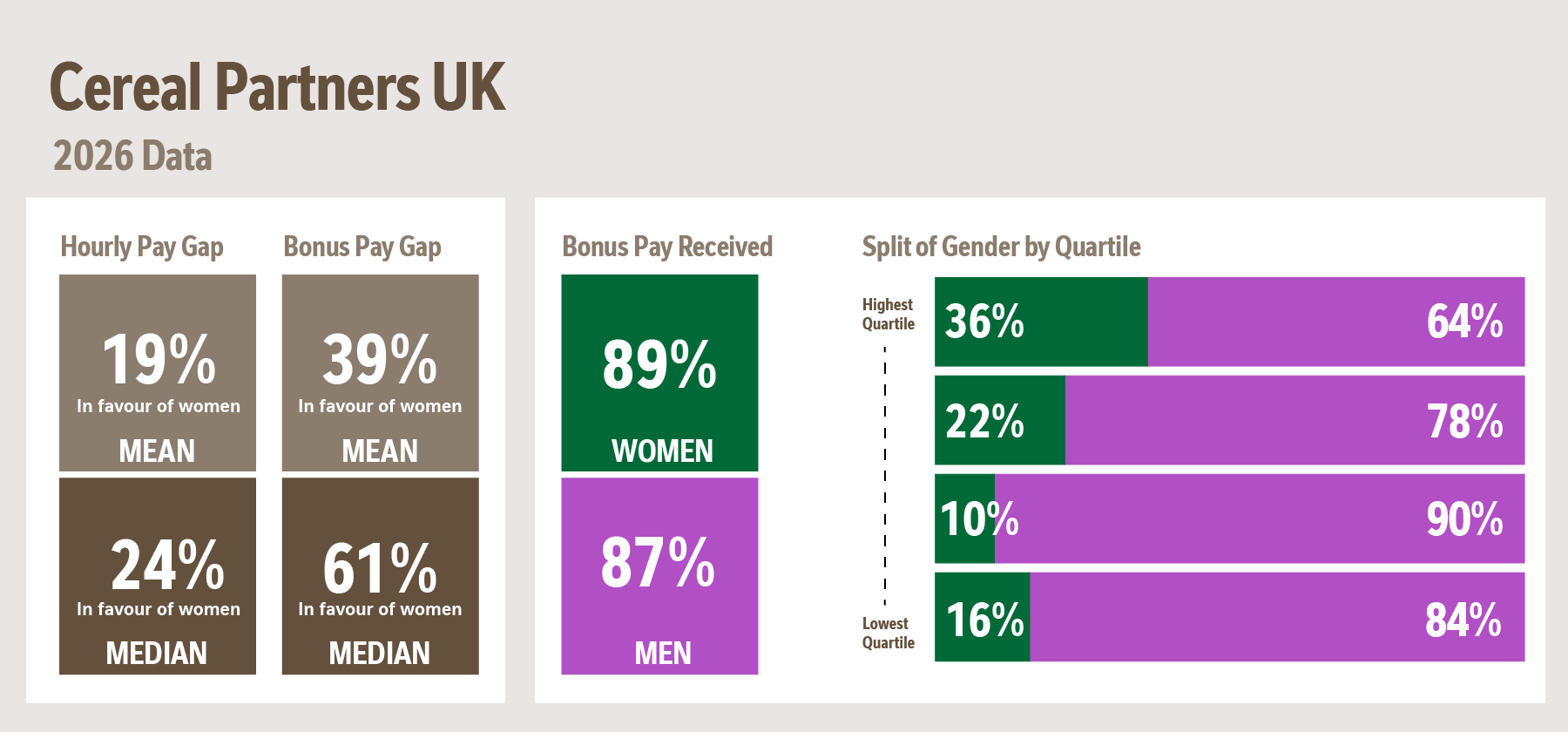
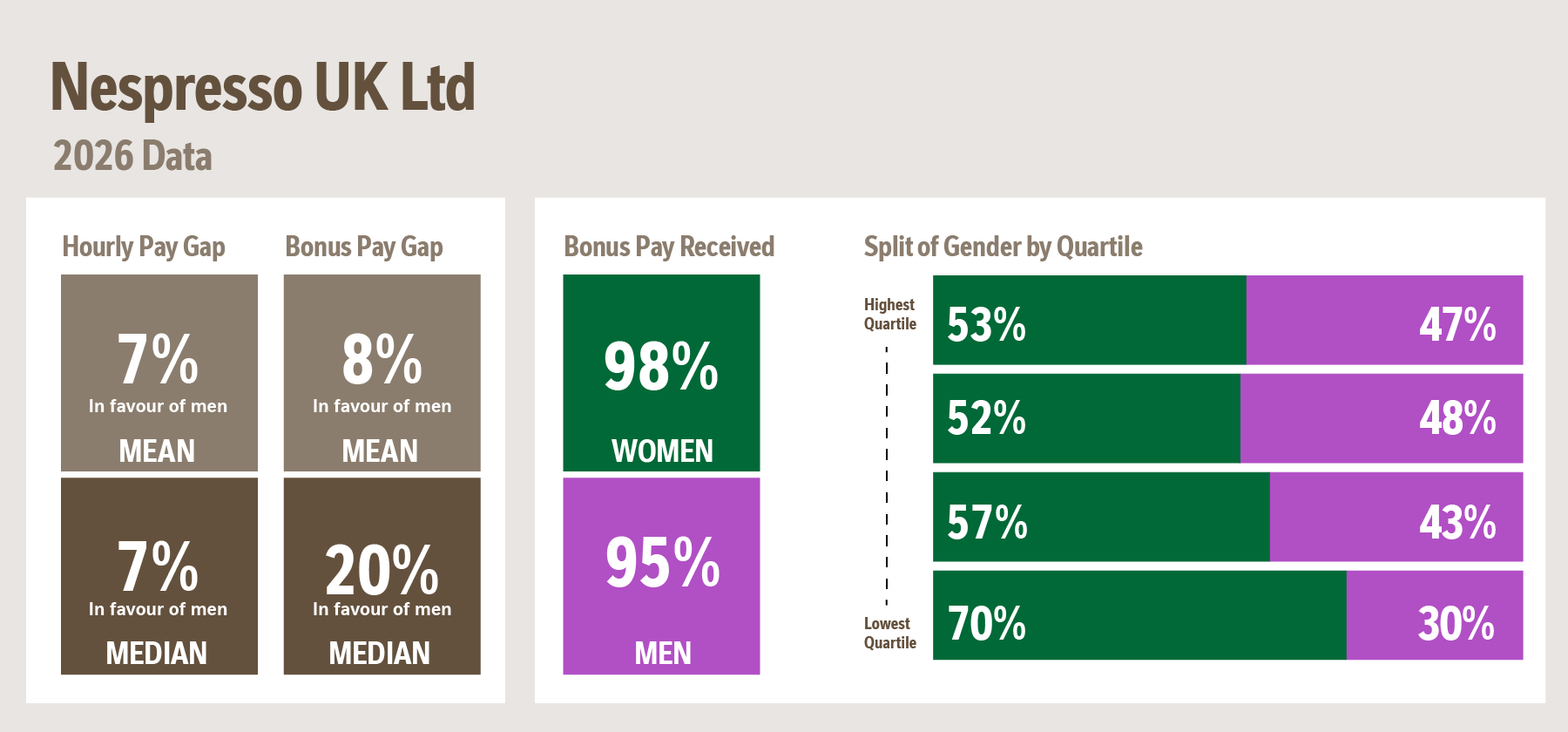
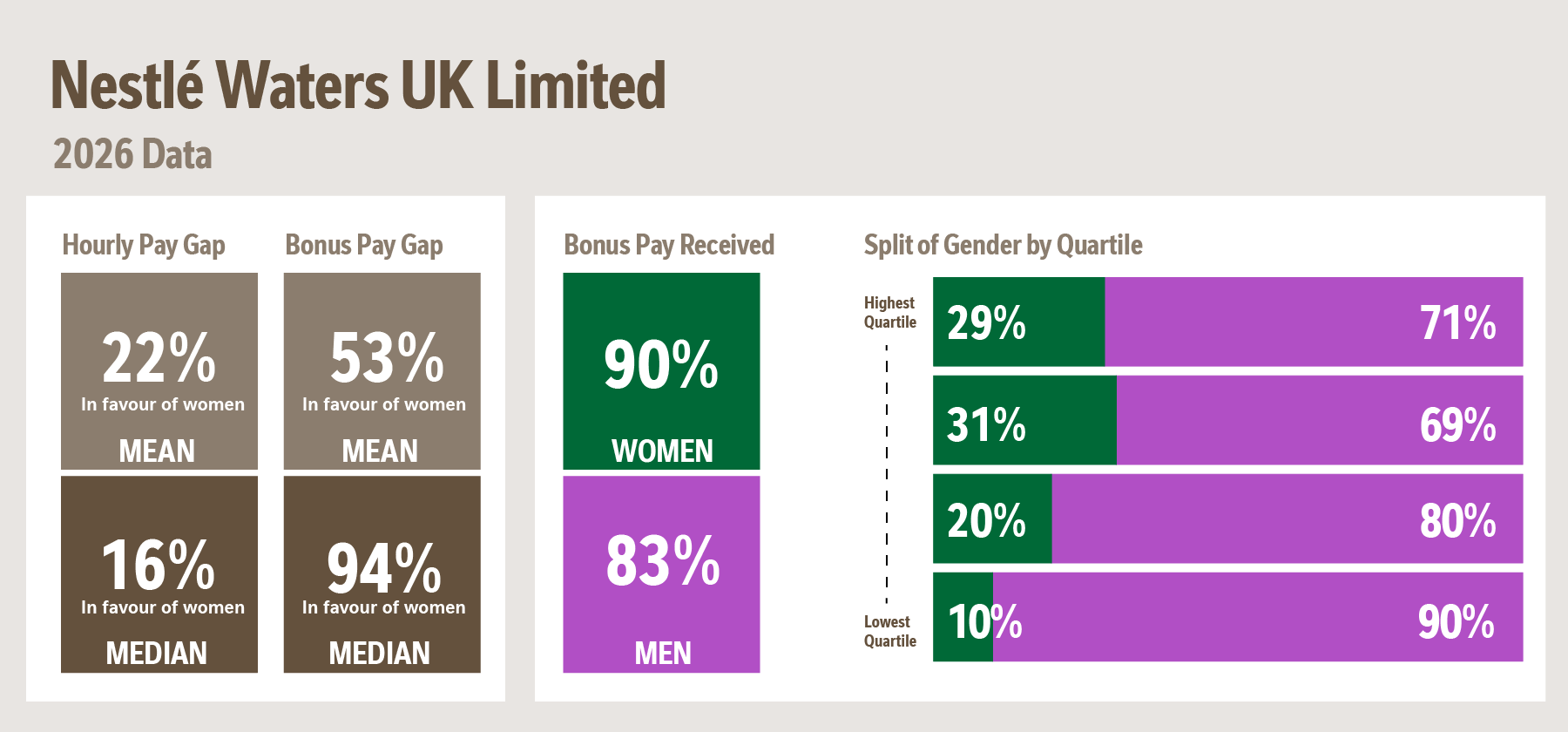
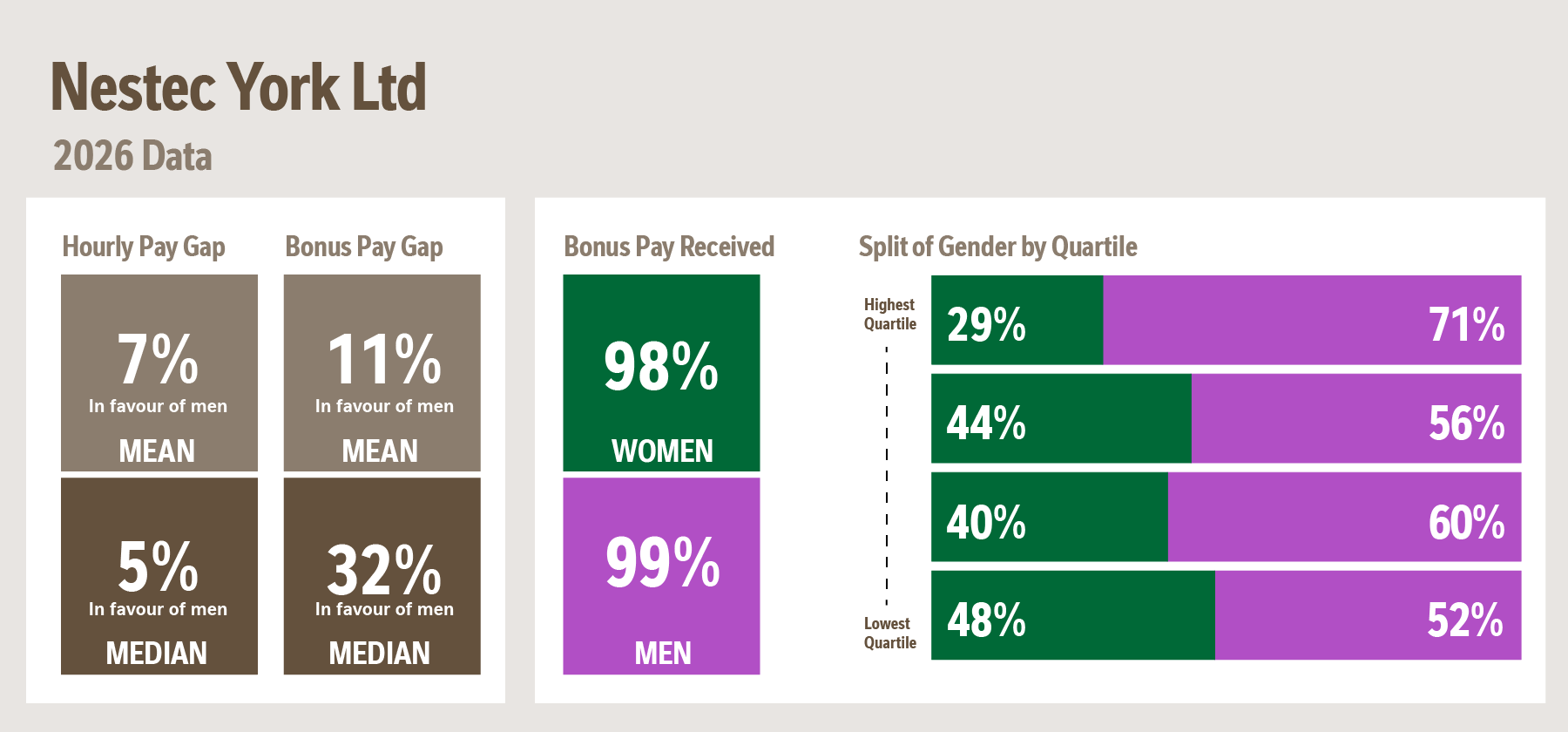
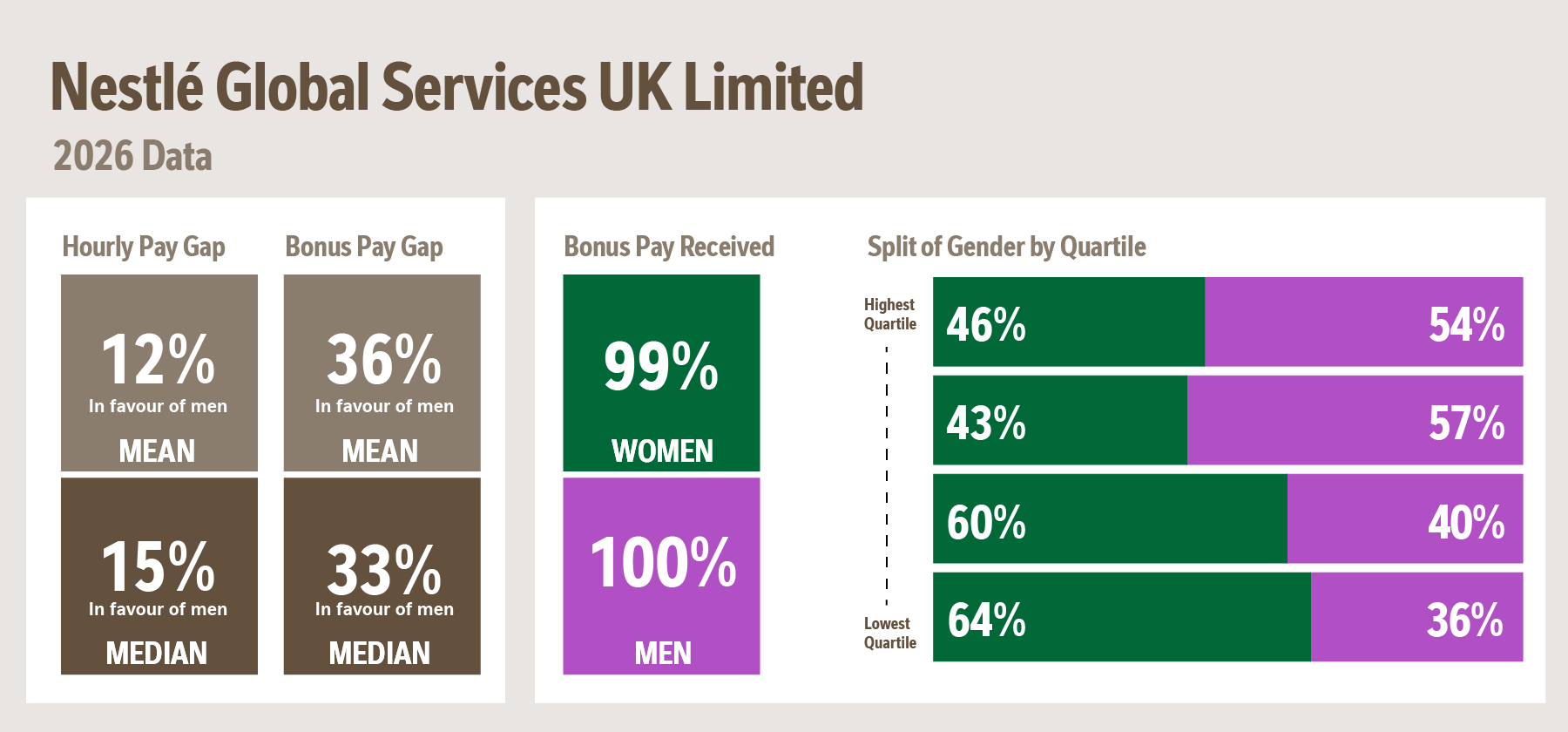

* We are not able to provide figures for this gender pay comparison.
“Inclusion is about how people feel at work every day. At Nespresso, colleagues work in different environments, from boutiques to offices, and face a variety of different challenges. As leaders across Nestlé, we need to listen and understand the barriers facing colleagues at different stages of their lives and careers, from building their skills or moving into a leadership role. Improving gender balance means acting on what we hear and making sure we recognise our employee's potential wherever they sit in the business.”

Our Approach
While we’ve made progress, achieving gender balance within our organisation remains an ongoing journey. Our dedication to building a truly diverse and inclusive workplace is unwavering, and we are committed to providing equal opportunities for people of all genders to develop and advance their careers.
We hold our leaders accountable for championing inclusion and equity, and we set clear goals for gender balance throughout the organisation. Our senior leaders are expected to drive progress, and we regularly review our strategies to make sure we remain on course to achieve balanced representation and foster an environment where everyone can thrive.
Attracting and developing talented individuals of all genders is a priority for us. Following a proactive recruitment audit, we changed our recruitment practices which has led to tangible improvements in gender balance. Our Nestlé Academy team has also been successful in attracting increasingly diverse cohorts of young people, helping to build a robust and representative pipeline of future leaders.
We understand that gender equality is intertwined and closely linked with other aspects of personal identity such as race, sexuality, disability, age, and life stage. Our approach recognises the importance of intersectionality, and we strive to support all colleagues in their unique experiences.
Our Diversity, Inclusion and Belonging strategy is designed to reflect the true diversity of society and ensure that difference is valued. To achieve this, we run a range of initiatives:
- Inclusion training for all our manufacturing colleagues
- Support from six colleague networks for marginalised communities
- Active involvement in external groups such as the Nestlé First Milk Women in Agriculture Group, the Women in Engineering Society, Andy's Man Club, Stonewall Housing and Carers UK
These partnerships and networks empower individuals of all genders facing challenges, with the shared goal of a more gender-equitable society. We are also strengthening our supplier diversity programme, so that women-owned businesses have fair opportunities through our procurement processes.
Our commitment in action
Our commitment to gender equality goes beyond our data. It shapes how we recruit, develop and support our people at every stage of their lives and careers, including colleagues experiencing menopause.
Many of these practices are well established:
- Recruitment: inclusive job descriptions, fair and structured interviews, and advertising flexible working in our job adverts
- Representation: setting targets to improve gender representation
- Flexible working: flexible working and leave policies that support colleagues at different life stages
- Menopause support: training for managers, access to occupational health advice, and support groups and networks for colleagues experiencing menopause
We're pleased to see the UK Government asking employers to focus on the same areas. Employers with 250 or more employees can now publish a voluntary Equality Action Plan alongside their gender pay gap data, setting out how they're addressing their gender pay gap and supporting employees experiencing menopause. Subject to legislation, these plans will become mandatory from spring 2027. We support this approach, and it gives us a useful framework to check our progress against.
We already have strong foundations in areas such as mentoring and development, and transparency around pay, promotion and reward, but we know there's always room to go further. Over the coming year, we'll use the Government's recommended actions alongside our own priorities to agree which steps to take next. That means strengthening these areas and introducing new actions that address our gender pay gap and better support colleagues experiencing menopause. We'll share our progress in next year's report.
We remain mindful that true progress is achieved through ongoing learning, allyship, and reflection. We are proud of the strides we have made, yet we understand there is still more to do. With humility and determination, we reaffirm our commitment to fostering an inclusive environment where everyone thrives, and no one is left behind.
Declaration of accuracy: I confirm that this statement is true to the best of my knowledge and belief."